Notes on agent memory, continuity, and building with Stele
How-tos, comparisons, benchmark findings, and engineering notes from the team. For people deciding how their agents keep and share project context.
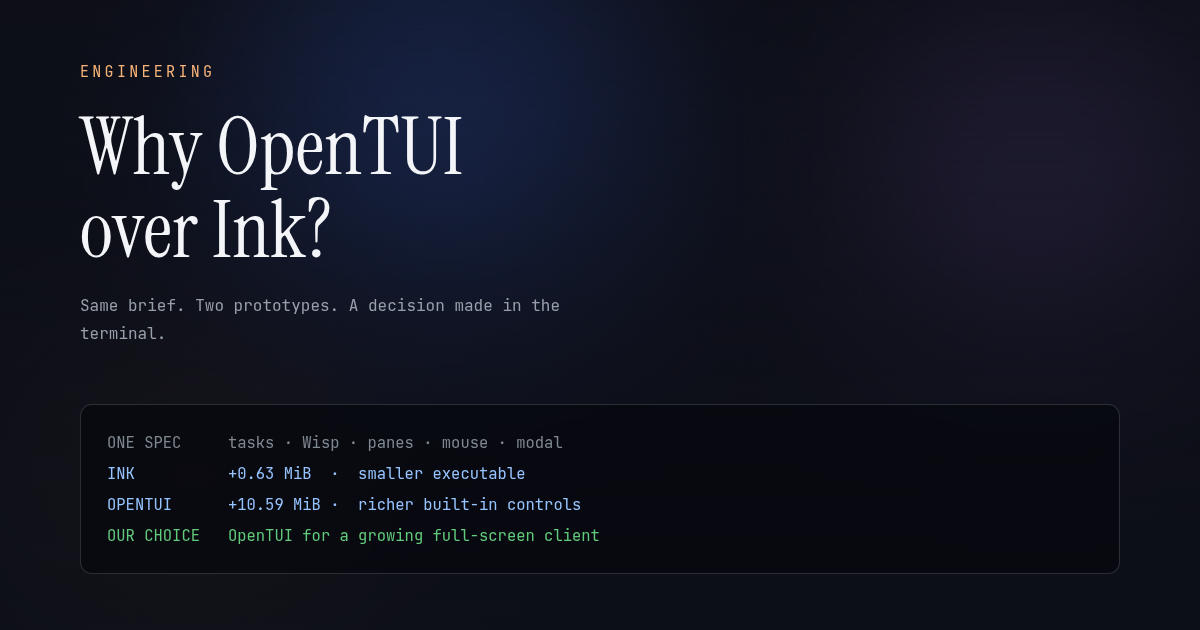
Why we chose OpenTUI over Ink for the Stele CLI
OpenTUI vs Ink for a full-screen terminal app: we built both, measured binary size, tried them in a terminal, and chose the renderer that fit Stele's TUI.
Read post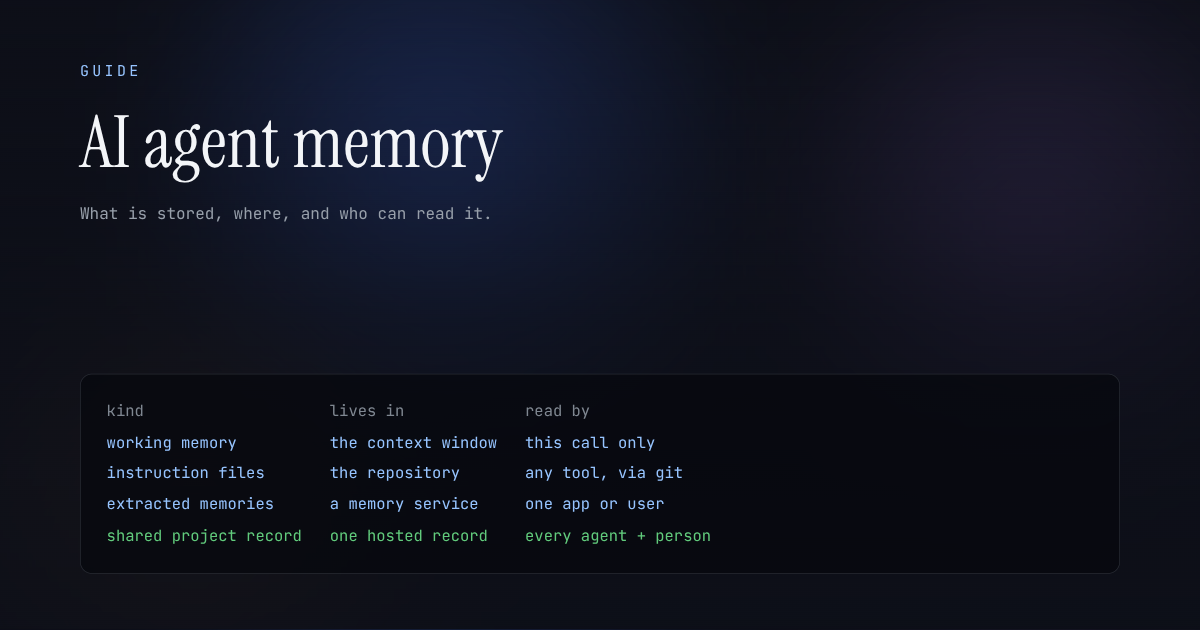
AI agent memory: what it is, the kinds that exist, and how to choose
A plain guide to AI agent memory: how it differs from the context window, the seven kinds in real systems, where each one lives and who can read it, and how to choose.
Read post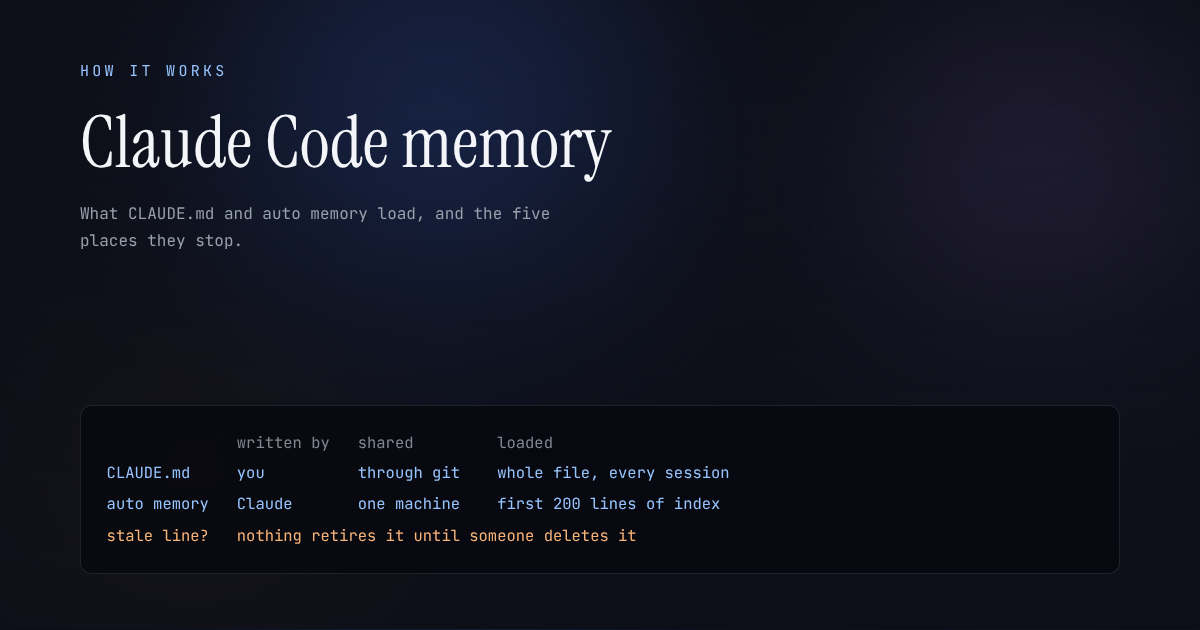
Claude Code memory: how CLAUDE.md and auto memory work, and where they stop
What Claude Code loads at the start of every session, where auto memory lives, what belongs in CLAUDE.md, and the five places the built-in memory stops helping.
Read post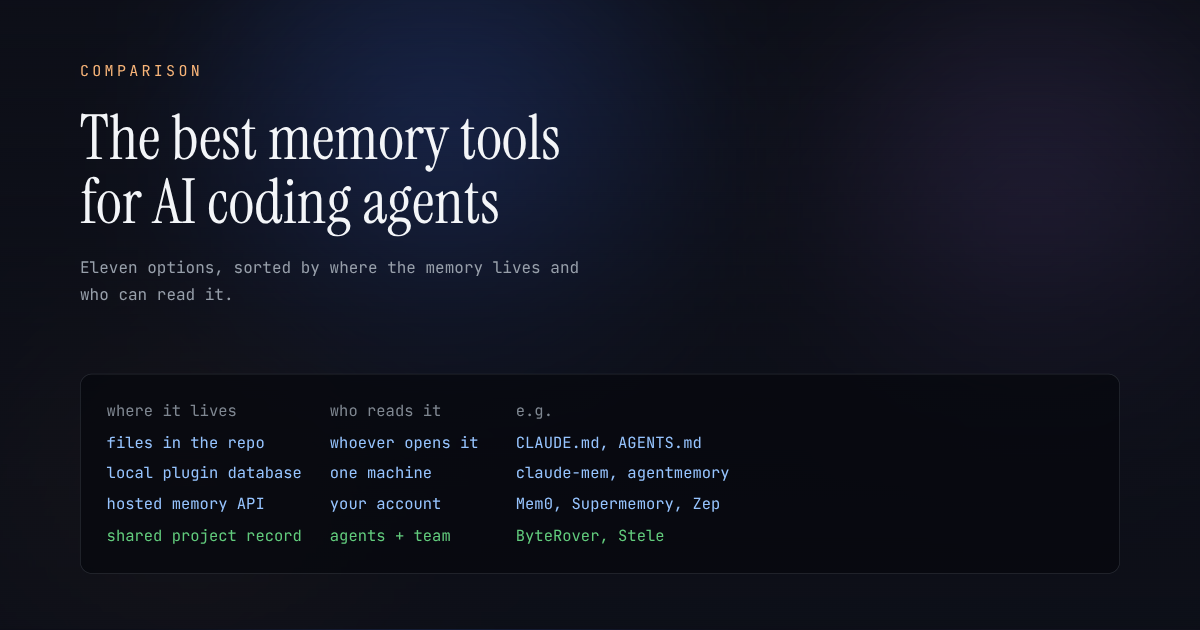
The best memory tools for AI coding agents in 2026
Eleven ways to give Claude Code, Cursor and Codex persistent memory, compared on what they store, who can read it, whether a team can share it, and what they cost.
Read post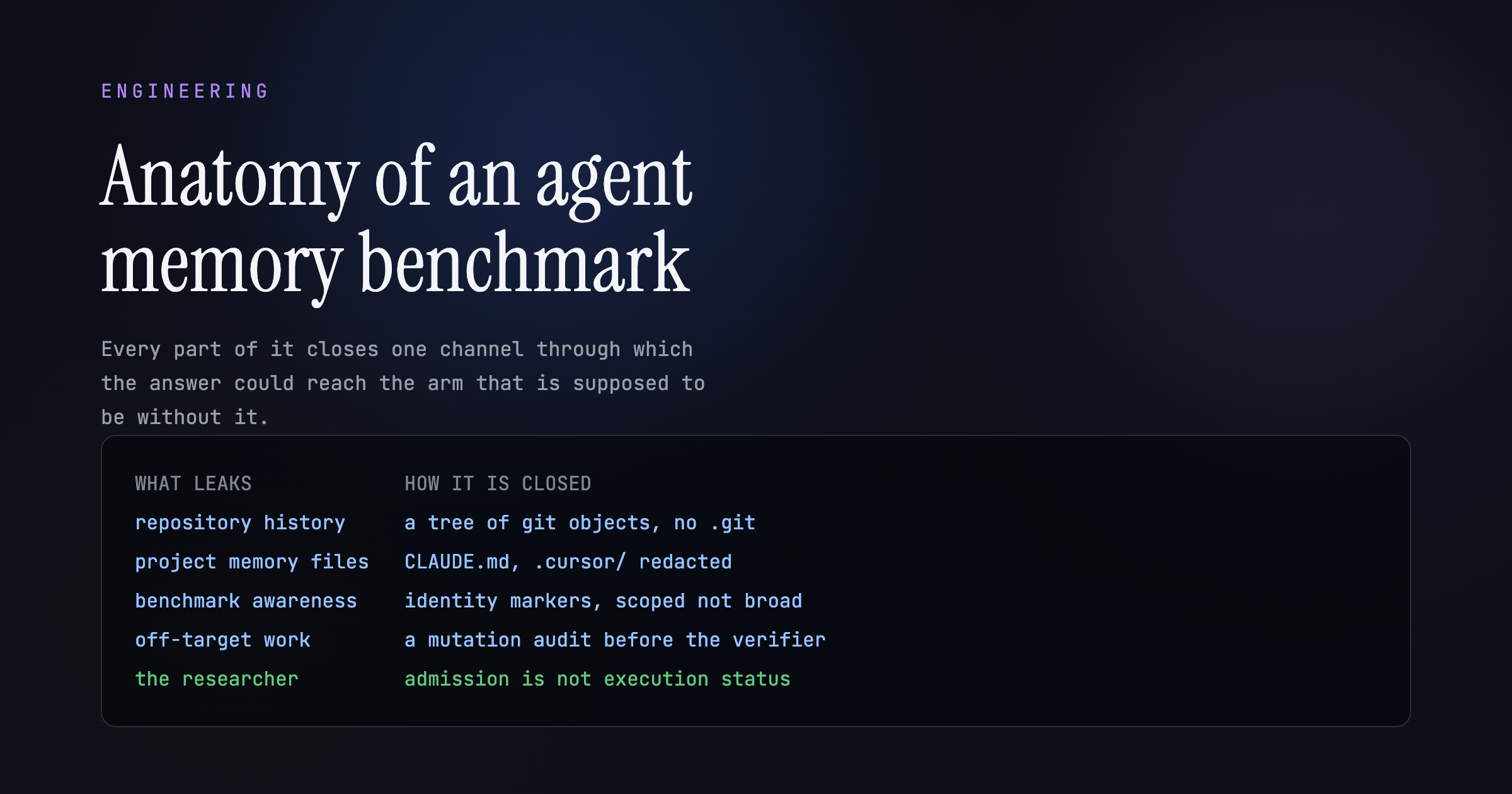
Anatomy of an agent memory benchmark
We open-sourced our benchmark harness. Almost none of it is about running agents: nearly all of it defends one claim, that two runs differed in exactly one thing.
Read post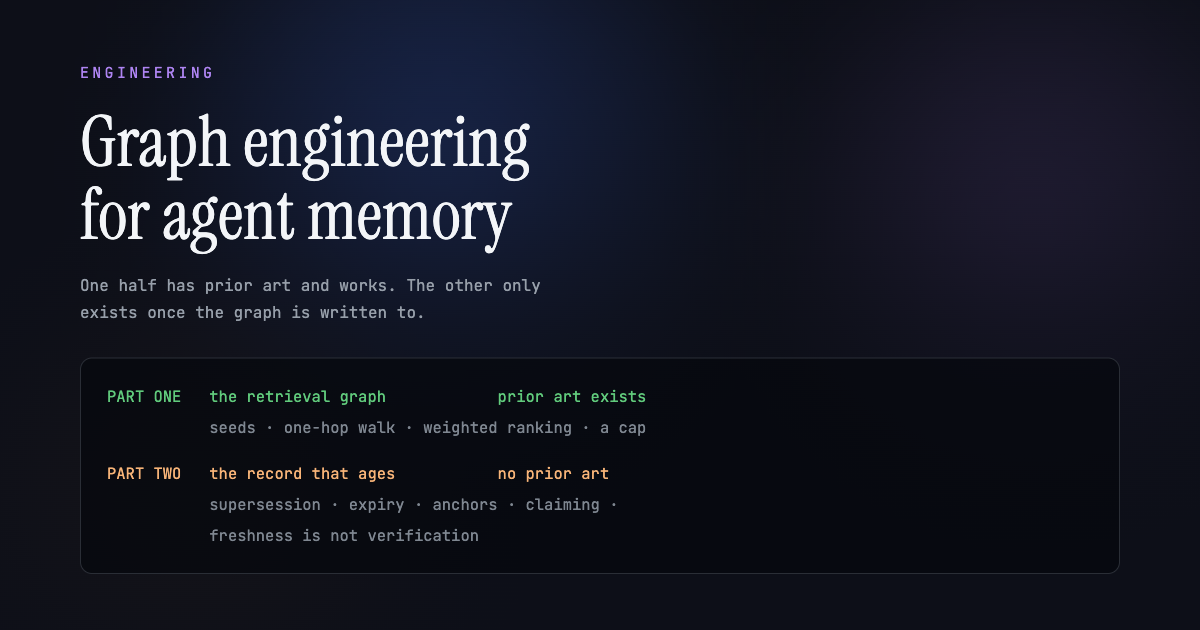
Graph engineering for agent memory
Retrieving over a graph is well understood and mostly works. Keeping one true as it accumulates is not, and that half decides whether an agent gets helped or quietly misled.
Read post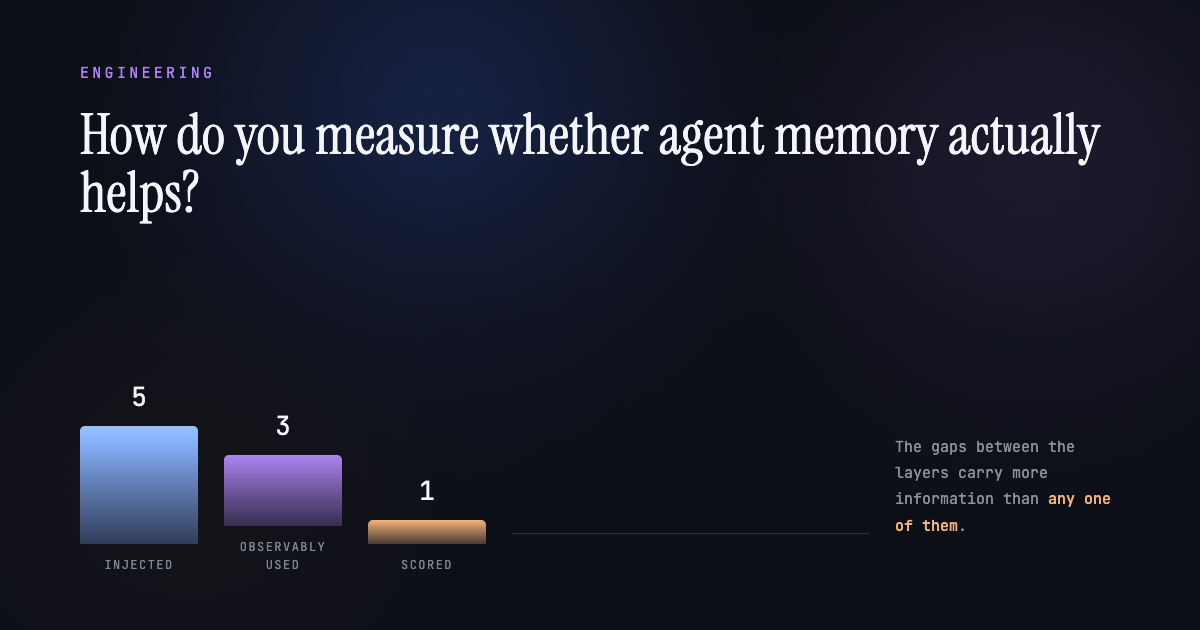
How do you measure whether agent memory actually helps?
Everyone can produce a demo where memory helps. We tried to build a benchmark that could tell us it does not, and mostly learned how many ways one can measure nothing.
Read post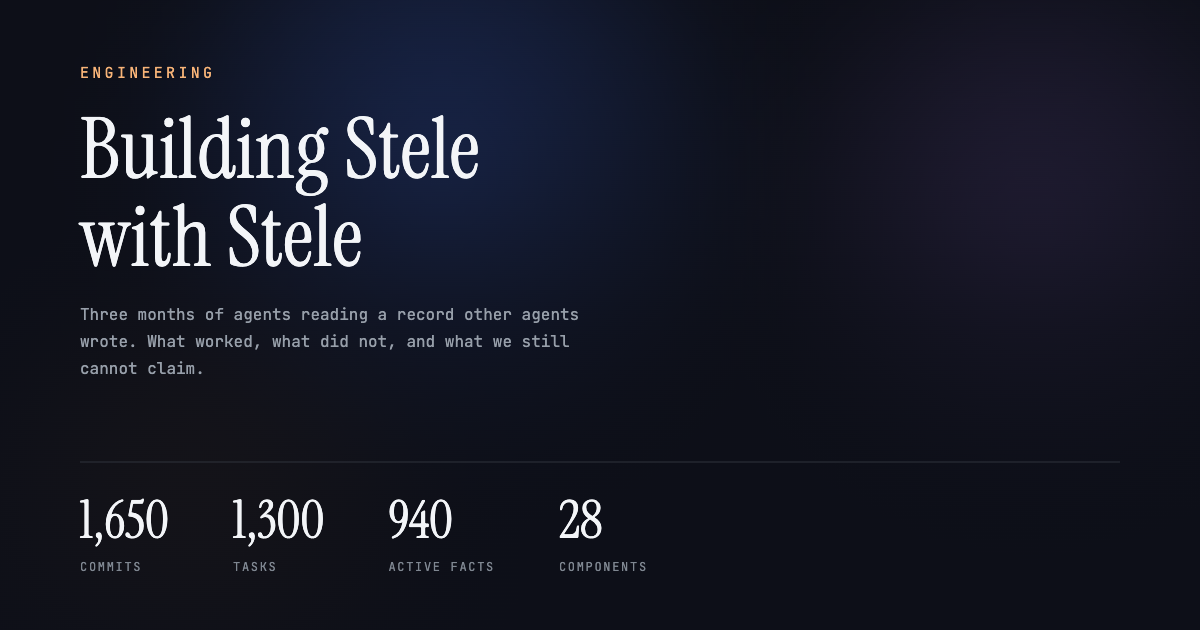
Building Stele with Stele
Three months, 1,650 commits, and roughly 1,300 agent-run tasks on a project record other agents wrote. What worked, what did not, and what we still cannot claim.
Read post
Why markdown rot breaks agent memory
Your instructions file works, until it quietly starts lying. The three ways a notes folder fails an agent, and what a fact needs before it is safe to serve.
Read post
When a fact stops being true
Agents wrongly retired facts eleven times out of eleven, and rewriting the guidance moved the rate by zero. So we changed what a wrong retirement costs.
Read post
A file, a wiki, or a shared ledger?
Three questions decide whether your notes folder is still enough: does anything read it unasked, does anything keep it true, can two agents coordinate through it.
Read post
Switch agents without losing the project
Every switch between agents costs you the context you built up in the last one. Why per-tool memory cannot fix that, and what ten harness adaptors actually look like.
Read post
How an agent session uses Stele
What happens in the eight seconds before your agent answers: seeds, a one-hop graph walk, the weight tables that took several tries, and the risk callout.
Read post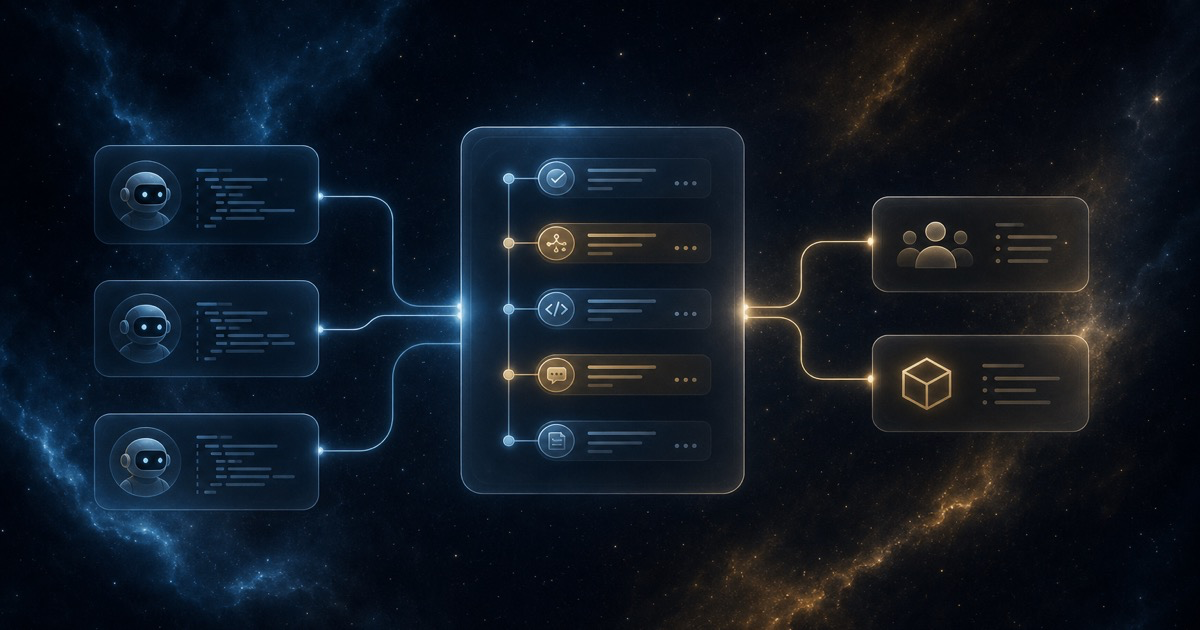
Stele vs the usual ways to give agents memory
Repo markdown, wikis, native harness memory, memory APIs, memory-first agents. What each is genuinely good at, and the narrow case a shared record wins.
Read post